


CarPal Bluetooth OBD2 Scanner – All Systems, 6 Resets, Smog Check
CarPal Bluetooth OBD2 Scanner – All Systems, 6 Resets, Smog Check
- Know what the check-engine light means, before you call a shop
- Reads 7 systems — engine, transmission, ABS, airbag and more
- 6 service resets a shop charges you for
- No subscription, no monthly fee — a year of updates included
Couldn't load pickup availability
Shipping & returns
Shipping & returns
Orders are prepared within 24–48 hours, with email tracking. You have 30 days after delivery to change your mind: reach out and we'll sort it out.


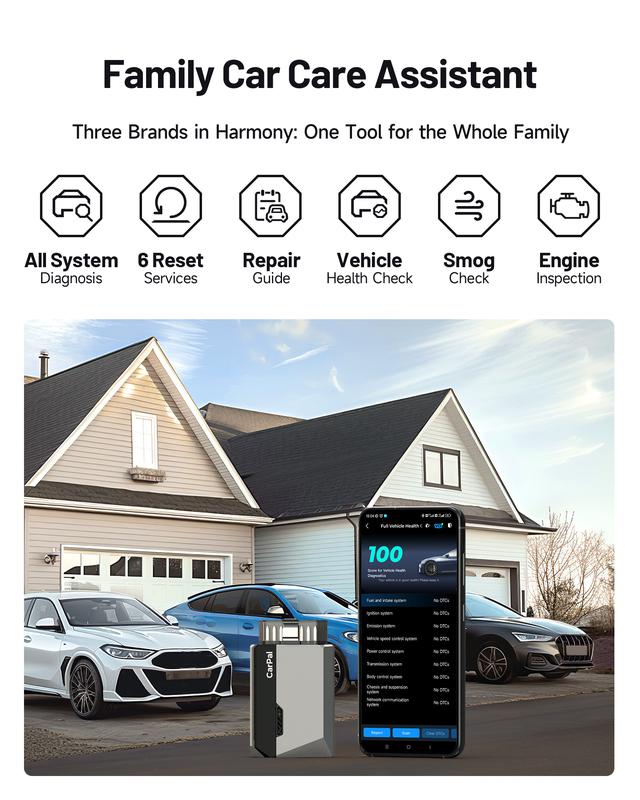
| Basic code reader | CarPal | |
|---|---|---|
| Reads the airbag, ABS and transmission too | ✗ | ✓ |
| Tells you how serious the fault is | ✗ | ✓ |
| Explains what to do about it | ✗ | ✓ |
| Resets oil, TPMS and battery service | ✗ | ✓ |
| Pre-checks emissions before a smog test | ✗ | ✓ |
| Works with no subscription | — | ✓ |
For guidance only, compared with an entry-level OBD2 code reader.
A check-engine light tells you exactly one thing: something is wrong. It will not tell you whether it is a gas cap you did not tighten or a catalytic converter, and that gap is where the money goes — you pay someone just to read the code, and you accept whatever comes next because you have no way to judge it. This plugs in under the dash and closes the gap. The fault, how serious it is, and what it usually takes to fix. A Déniche find, the kind we like.
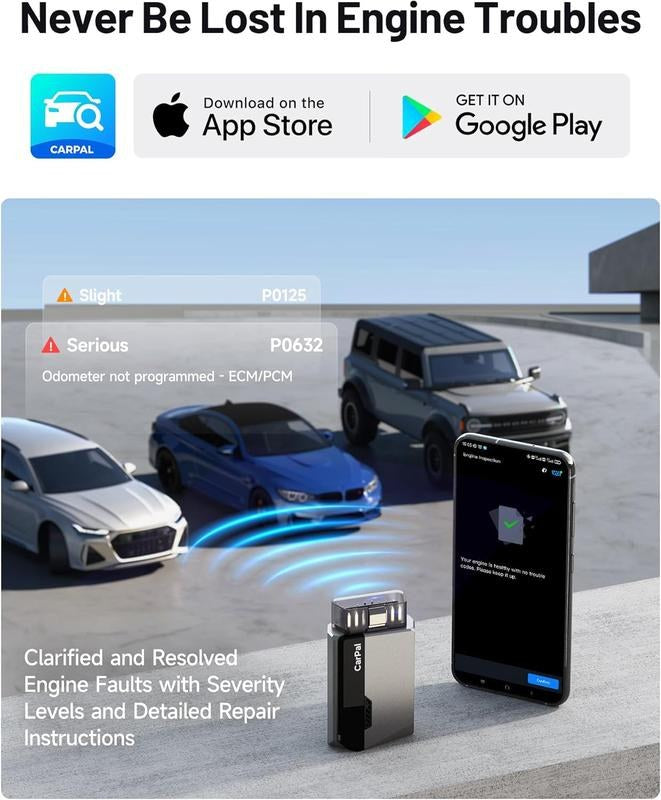
A code is not an answer.
Any twenty-dollar reader will hand you P0420 and stop there. What you actually need to know is whether that means drive it home or do not drive it at all, and roughly what it costs to put right.
Each fault comes back marked slight or serious, with the system it sits in and a repair guide for it. That is the difference between holding a code and understanding your car.
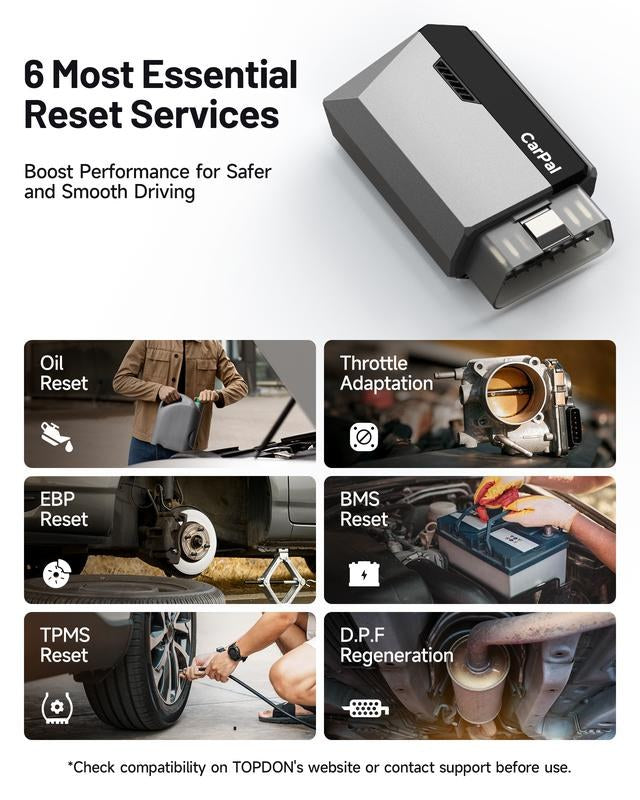
The six resets you were paying for.
Oil service, throttle adaptation, electronic parking brake, battery registration, tire pressure, diesel particulate filter. These are the small jobs a shop books you in for and bills as labor, and most of them take under a minute once something can talk to the car.
Which ones your car accepts depends on the model, so check yours first — we would rather tell you that here than have you find out afterwards.
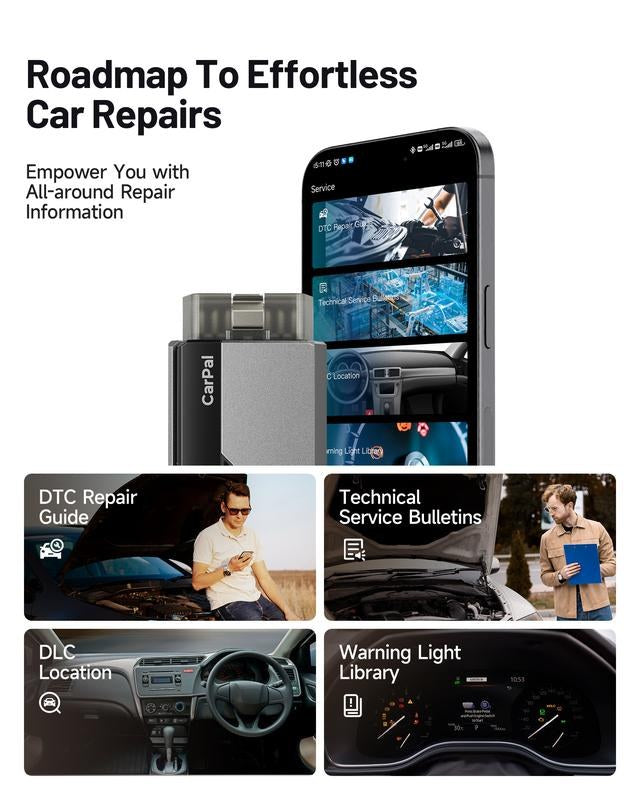
Everything a shop looks up, on your phone.
Behind each code sits the repair guide, the manufacturer's service bulletins for that fault, where the diagnostic port is on your model, and a library of every warning light on the dash.
It is the same reference material the person behind the counter is reading. Having it yourself does not turn you into a mechanic — it turns a conversation you were losing into one you can follow.
FAQ
Frequently asked questions
Will it work on my car?
Reading and clearing codes works on any car with an OBD2 port — that is every car sold in the US since the 1996 model year. The six service resets are the part that varies by model, so check yours against TOPDON's compatibility list before you buy.
Do I need a subscription?
No. The app is free, there is no monthly fee, and a year of updates is included.
Does it drain the battery if I leave it plugged in?
It draws power from the OBD2 port, so unplug it when you are done rather than leaving it in for weeks. It takes two seconds and it lives in the glovebox.
Can it clear the check-engine light?
Yes, it clears codes. Worth saying plainly though: clearing a light does not repair anything. If the fault is still there the light comes back, which is exactly what you want it to do.
What does the smog pre-check actually tell me?
Whether your car would pass an emissions test today, and which readiness monitor is not set if it would not. It is there so you find out at home instead of at the test station. It works on iPhone and Android, through the free CarPal app.